
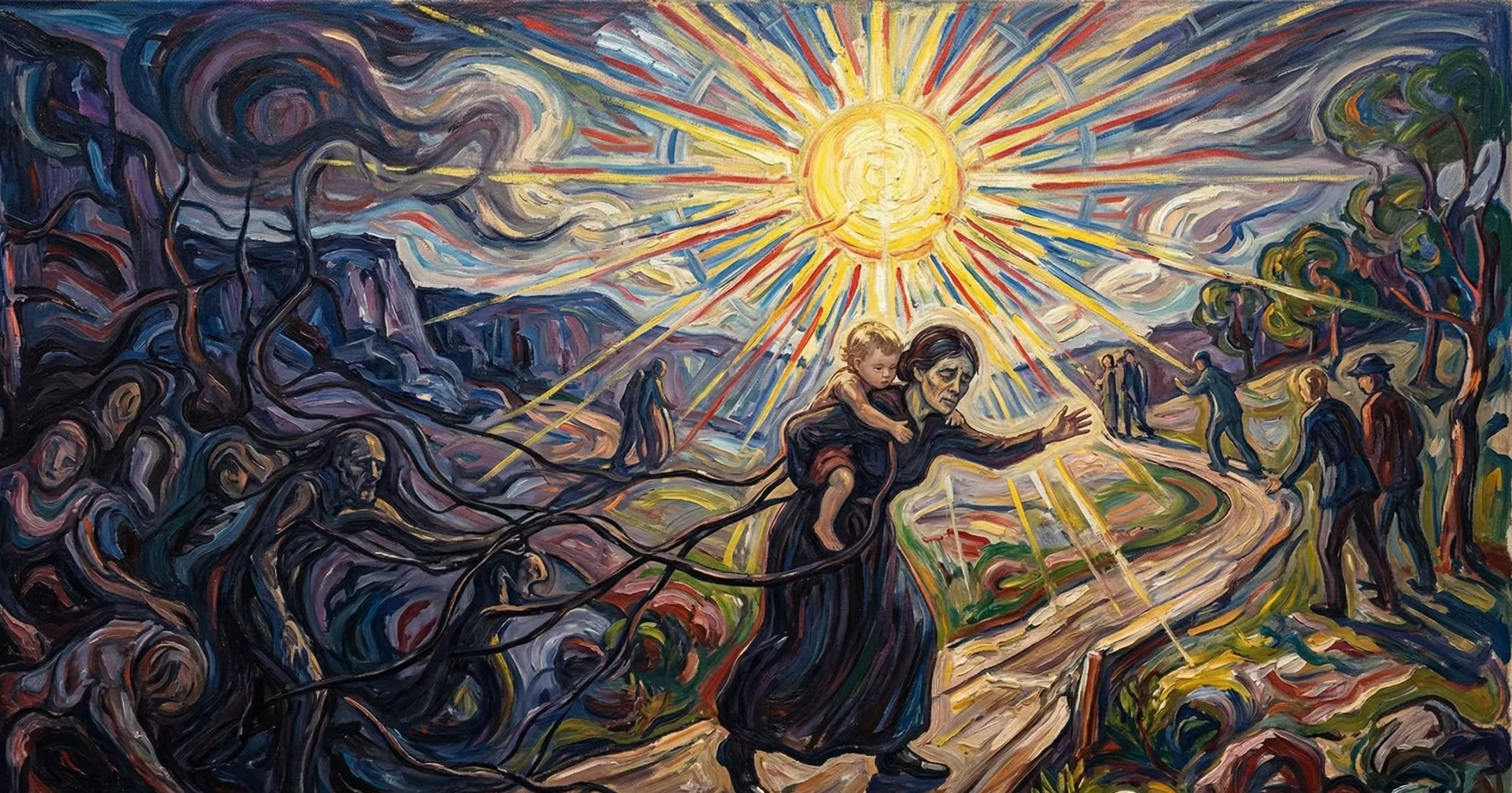
To heal childhood family wounds, you must recognise trauma, process emotions through therapy, and reconnect with your body using mindful movement. Engaging in supportive communities, sharing your story, and practicing daily grounding exercises helps rebuild trust, allowing you to establish secure adult relationships and break cycles of generational pain.
Healing childhood family wounds often feels like trying to solve a puzzle with missing pieces. You might feel a heavy weight in your chest that you cannot explain. You might find yourself pushing people away even when you want them close. Many people in our community carry these invisible scars from their early years. These injuries happen when the people who should have kept us safe also caused us fear.
When a child experiences this, they face a difficult choice. They need their parents for survival, yet they feel a deep urge to run away. This conflict creates an invisible web of confusion that follows them into adulthood. We call this a need and fear dilemma. It means you want love more than anything, but you also view love as a potential threat. Understanding this pattern is the first step toward finding a sense of calm.
Why healing childhood family wounds matters for your health
The pain from our early years rarely stays in the past. It often shows up in the way we handle our feelings today. You might notice that your emotions feel like a rollercoaster. One moment you are fine, and the next you feel overwhelmed by anger or sadness. This happens because your internal alarm system stayed on for too long during childhood. Your brain learned to stay alert for danger even when you were safe.
This constant state of alert affects your physical body too. Many people experience frequent headaches or stomach pains that doctors cannot fully explain. Your body is often trying to speak the words that your mind has forgotten. It holds the tension of old memories that were never processed. By focusing on healing childhood family wounds, you give your body permission to finally relax. You begin to understand that your physical symptoms are often messengers of your internal world.
The invisible weight of the generations before us
We do not live in a vacuum. Our parents and grandparents lived through times of great upheaval and change. Many of them survived wars, displacement, and extreme hardship. When people go through such intense pain, they often stop talking about it to survive. They might become emotionally distant or very strict as a way to protect their children. Unfortunately, this silence can feel like a cold wall to a growing child.
You might feel like a ghost in your own home sometimes. You see the pain in your parents’ eyes, but you do not have a name for it. This is often called a hidden inheritance of pain. It moves from one generation to the next through silent glances and unspoken rules. You might find yourself feeling guilty for being happy when your elders suffered so much. Healing childhood family wounds involves recognising that this pain does not belong to you alone.
Understanding the struggle with trust and connection
Trust can feel like a foreign language if you grew up in an unpredictable home. You might feel that the world is a place where people are always hiding their true intentions. This makes it very hard to let a partner or friend get close to you. You might find yourself constantly checking for signs that someone is about to leave. This fear of being left behind is a very common response to early neglect or loss.
Some people respond to this fear by becoming very independent. They decide that they do not need anyone else to be happy. This is often a shield used to prevent further hurt. Others might become very clingy, constantly seeking reassurance that they are loved. Both of these paths come from the same root of feeling unsafe in early life. Healing childhood family wounds allows you to find a middle ground where you can be both independent and connected.
How our culture shapes our emotional world
In our society, family harmony and loyalty are often valued above all else. We are taught from a young age to put the needs of the group before our own. While this creates strong communities, it can also make it hard to talk about personal pain. You might feel that speaking about your struggles is a sign of being ungrateful to your parents. This cultural pressure can lead to a deep sense of isolation.
Modern life adds even more pressure to this mix. As our cities grow and families change, the traditional ways of connecting can break down. Divorce or moving away for work can leave children feeling abandoned. Because there is often a stigma around mental health, many people suffer in silence. They might feel they have to keep a perfect face for the outside world while crumbling inside. Healing childhood family wounds requires us to look past this mask of perfection.
The path to emotional balance and self-regulation
Learning to manage big feelings is a core part of the recovery process. When you grow up with trauma, you might never have learned how to soothe yourself. You might feel like you are at the mercy of your environment. If someone is mean to you, your whole day is ruined. If someone forgets to call, you feel worthless. This is because your internal compass is sensitive to every shift in the wind.
Therapy can act as a safe space to build a new toolkit for these moments. It is like learning to build a sturdy house after living in a tent during a storm. You learn to identify the physical signs of stress before they turn into an explosion. You practice staying present in the moment instead of getting lost in old fears. This process helps you move from just surviving to truly living your life with intention.
Using the invisible web of the group to heal
Sometimes, the best way to heal is through the support of others. We often think of therapy as a private conversation between two people. However, being part of a supportive group can be incredibly powerful. A group acts like an invisible web that catches you when you feel like you are falling. It allows you to see that you are not the only one who feels broken or confused.
In a group setting, you can practice understanding what is happening in someone else’s mind. This is a skill that trauma often takes away from us. When we are scared, we stop being curious about others because we are too busy protecting ourselves. By listening to others, you begin to see patterns in your own behaviour. You realise that your reactions are not personal flaws, but natural responses to difficult past events.
Healing through movement and the wisdom of the body
Talking is not the only way to find peace. Since trauma lives in the body, movement can be a vital part of the solution. Gentle practices like slow stretching or focused breathing can help you reconnect with your physical self. These exercises help you feel grounded and steady when the world feels chaotic. They offer a way to bypass the shame or stigma that sometimes comes with traditional talk therapy.
When you move your body with intention, you send a message to your brain that you are safe. You are telling your nervous system that the danger has passed. This is especially helpful for people who find it hard to put their feelings into words. You do not need to explain why you feel heavy; you can simply work on feeling lighter through movement. This approach respects the wisdom that our ancestors held about the connection between mind and body.
Building a new story through community and art
Our history is often told by people who did not experience our specific pain. This can lead to a sense of being erased or misunderstood. One way to reclaim your power is by telling your own story. This does not have to happen in a clinical office. It can happen through art, writing, or sharing stories with your peers. When you give voice to your experiences, they lose some of their power over you.
By sharing our collective history, we begin to heal the wounds of the past generations. We stop being ghosts and start being active participants in our own lives. This collective storytelling helps us resist the idea that we should stay silent. It builds a sense of belonging that is essential for emotional health. You realise that your story is a thread in a much larger, beautiful fabric of resilience.
Finding professional support that fits your life
Seeking help is an act of bravery, not a sign of weakness. There are many different ways to approach the healing process today. Some methods focus on changing your thought patterns and building practical skills. Others focus on the deep emotional bonds you have with the people you love. The goal is always to help you feel more secure in yourself and your relationships.
In some cases, support comes from community workers who understand your specific cultural background. They can provide education and simple tools to help you manage daily stress. This makes mental health care accessible to everyone, regardless of their situation. The most important thing is to find a path that feels respectful and safe for you. Healing childhood family wounds is a marathon, not a sprint, and you deserve to have a team behind you.
How healing childhood family wounds changes your future
As you begin to heal, you will notice subtle shifts in your life. You might find that you are less reactive when a partner disagrees with you. You might feel more comfortable saying no to things that drain your energy. These small changes are signs that you are building a new internal foundation. You are no longer living solely out of your past pain.
Your relationships will also begin to change. When you feel more secure in yourself, you attract people who value and respect you. You stop looking for others to fill the holes left by your childhood. Instead, you enter connections as a whole person capable of giving and receiving love. This is the ultimate goal of healing childhood family wounds: to live a life defined by your choices, not your history.
Creating a ripple effect of health for the next generation
When you do the work to heal, you are not just helping yourself. You are changing the future for your children and their children. By breaking the cycle of silence and fear, you give the next generation a chance to grow up feeling truly safe. You show them that it is possible to face pain and come out stronger on the other side.
This is how we heal a community. One person at a time, we choose to look at the difficult parts of our past with compassion. we decide that the weight of previous generations does not have to be passed down anymore. We create a new legacy of emotional openness and strength. Healing childhood family wounds is the greatest gift you can give to your future family.
Moving forward with hope and patience
The journey of recovery is rarely a straight line. There will be days when you feel like you have taken ten steps backward. This is a normal part of the process of growth. During those times, it is important to be gentle with yourself. Remember that your patterns were created to help you survive a difficult situation. They are not mistakes; they are old tools that you no longer need.
Every time you choose to be kind to yourself, you are healing a piece of that childhood wound. Every time you reach out for support, you are proving to yourself that you are worthy of care. You have the power to write a new chapter for your life. The past may have shaped you, but it does not have to define your future.
Try this today: Simple exercises for connection
Healing happens in the small moments of your daily life. You do not need to wait for a major breakthrough to start feeling better. Here are a few simple steps you can take today to begin reconnecting with yourself and others.
Notice your body in the moment. Several times today, stop and check in with your physical sensations. Are your shoulders tight? Is your breath shallow? Simply noticing these things without judgment can help you stay grounded. When you notice tension, try to take three slow breaths into your belly. This simple act tells your brain that you are safe in this exact moment.
Practice looking behind the action. When someone in your life does something that upsets you, try to pause for a second. Instead of reacting immediately, ask yourself what might be happening in their mind. Are they tired? Are they feeling stressed? This helps you practice the skill of understanding others without feeling threatened. It creates a small space of calm in your interactions.
Write a letter you will never send. If there is a person from your past who caused you pain, try writing down all the things you wish you could say to them. Do not worry about being polite or making sense. Just get the feelings out onto the paper. When you are finished, you can tear up the paper or throw it away. This exercise helps move the heavy emotions out of your body and onto the page.
Create a safe space in your mind. Close your eyes and imagine a place where you feel completely at peace. It could be a beach, a forest, or a quiet room. Notice the colors, the smells, and the sounds of this place. Whenever you feel overwhelmed, take a moment to visit this internal sanctuary. It is a reminder that you have the internal resources to find calm even when the world feels loud.
Reach out for a small connection. Send a short text to a friend or smile at someone you see today. You do not need to have a long conversation. Just practicing the act of reaching out can help decrease the feeling of isolation. These tiny bridges of connection help rebuild your trust in the world around you. Healing childhood family wounds starts with these small, brave choices.
References
Bowe, C., Thomas, C., & Mackey, P. (2025). Perspective to Practice: Theoretical Frameworks Explaining Intergenerational Trauma, Violence, and Maltreatment and Implications for the Therapeutic Response. International Journal of Environmental Research and Public Health, 22(3), 321.
Cao-Nguyen, V. T. (2023). Đời cha ăn mặn, đời con khát nước: Perceptions of Intergenerational Trauma and Parenting Styles on Self-Compassion in Adult Children of Vietnamese Refugees. [Doctoral dissertation, Texas Woman’s University].
Castro-Vale, I. (2019). Intergenerational transmission of war-related trauma assessed 40 years after exposure. Annals of General Psychiatry, 18, 14.
Do, M. T. M., Nguyen, T. T. T., & Tran, H. T. T. (2022). Preliminary results of adapting the stepped care model for depression management in Vietnam. Frontiers in Psychiatry, 13.
Dunford, A. B. (2025). The Psychological Effects of Childhood Trauma on Adult Relationships. BYU ScholarsArchive.
Huang, C. Y., Zane, N. W., Hunter, L., Vang, L., Apesoa-Varano, E. C., & Joseph, J. (2023). Promoting Mental and Physical Health of Vietnamese Immigrants Through a Cultural Movement Intervention. Cultural Diversity and Ethnic Minority Psychology, 31(1), 46-57.
Lê, K. (2023). Transtrauma: Conceptualizing the Lived Experiences of Vietnamese American Youth. Journal of Southeast Asian American Education and Advancement, 18(1), Article 4.
Mai, M.-H., Giang, T.-V., Nguyen, T.-H., Huynh, V.-S., & Nguyen, V.-K. (2022). The trauma of Vietnamese children living in the incomplete families. Espergesia, 9(1), 35-45.
Nguyen, P. (2025). Bắt Đầu Từ Đầu, Embodied: Vietnamese American (Re)Constructions of Abolitionist Counter-Theater. [Interdisciplinary honors thesis, Stanford University].
Şar, V. (2025). From Attachment Trauma to Traumatic Attachment: Invisible Injuries of Early Childhood and Subtle Relational Codes of Self-Regulation. Clinical Neuropsychiatry, 22(5), 417-422.