
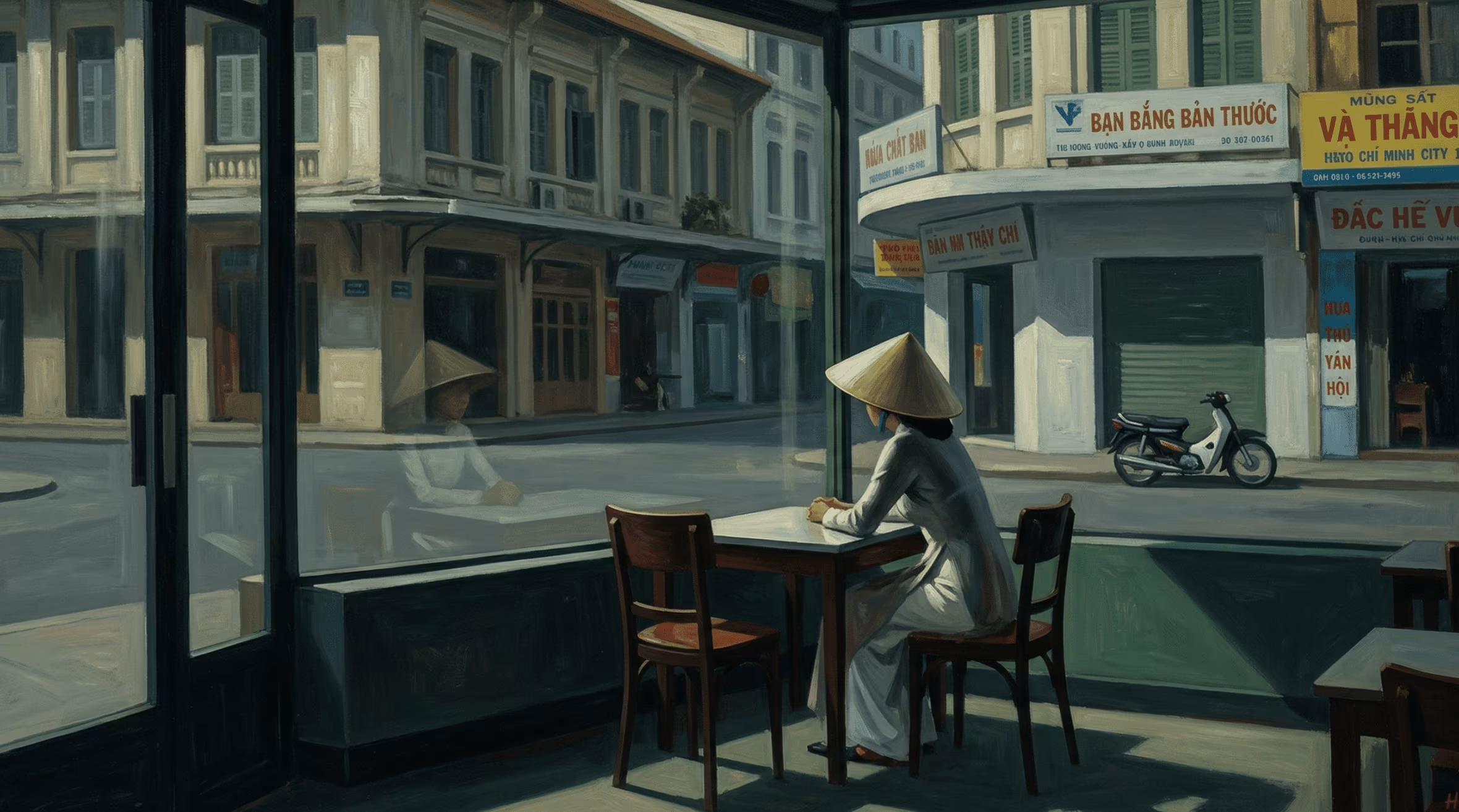
High performers in Ho Chi Minh City struggle with social isolation because achievement-contingent self-worth drives them to prioritise self-validation over vulnerable connections. Urban stressors and a lack of bonding social capital worsen this loneliness. Overcoming it requires adopting learning goals, taking relational risks, and seeking spaces like group therapy to foster unconditional acceptance.
High performer social isolation often surprises those who move to a fast-paced city for a better life. Many people believe that economic advancement naturally improves your well-being. This belief stems from the high performer syndrome. It suggests that only the most robust individuals move to hubs like Ho Chi Minh City. However, research reveals a startling paradox. These ambitious newcomers often suffer from poorer mental health than long-term residents. They face more severe loneliness and more emotional limitations.
Why high performer social isolation happens in the city
High performer social isolation is frequently tied to how you view your self-worth. Many high-achievers base their entire self-esteem on professional success or independence. Psychologists call this achievement-contingent self-worth. When your value depends on your output, you adopt self-validation goals. You feel a chronic need to prove your worth to yourself and others. This internal pressure creates a barrier to deep, meaningful friendships.
The subconscious avoidance of friendship
In a high-pressure environment, you might feel your self-worth is always on the line. Professional setbacks feel like personal attacks on your value. To protect yourself, you may hyper-focus on your own skills. This defensive reaction creates emotional distance between you and others. You might subconsciously avoid seeking support. Acknowledging a flaw feels like an invitation for rejection. Research shows that this focus on the self can make you appear preoccupied. Others may see you as unsupportive or even bored by their problems. This cycle actively drives people away and prevents close connections.
Urban factors driving disconnection in HCMC
The landscape of Ho Chi Minh City compounds high performer social isolation. Moving from a rural area to an urban centre severs your original social ties. You lose the protective networks of your home village. The sheer scale of HCMC can feel alienating and lonely. This transition often raises your baseline anxiety. You must navigate an environment where your old behavioural patterns no longer apply.
Deficits in social capital and trust
Navigating a new city requires two types of social capital. Bridging social capital helps you advance through professional ties. Bonding social capital provides the emotional support you need to survive. High-performers often struggle to build both in a competitive urban setting. Furthermore, general social trust has declined in many urban areas. People tend to participate in separated groups rather than cohesive communities.
Environmental stressors and emotional bandwidth
The drive for success is physically taxing in a developing city. Many high performers face difficult working conditions and crowded living environments. These factors act as chronic stressors. They deplete the emotional energy you need to maintain deep friendships. When you are exhausted by your surroundings, you have less patience for social interaction. This exhaustion fuels the cycle of isolation further.
Healing through evidence-based interventions
You can break out of the high-performance trap with the right tools. Therapy offers a way to restructure your relationship with success and others.
Transitioning from validation to learning
One vital step is moving away from self-validation goals. Instead of trying to prove you are smart, try to adopt a learning goal. This involves seeing vulnerability as an opportunity for growth. When you are open to feedback, you stop seeing mistakes as threats to your value. This shift neutralizes the defensiveness that often pushes people away.
Taking relational risks and inclusive goals
You can challenge your instinct to withdraw by taking relational risks. This means adopting a goal that is larger than yourself. Try to prioritise creating a supportive relationship over proving your independence. Intentionally seeking connection helps rewire your brain. You learn that professional struggles do not have to lead to social rejection.
Cultivating unoptimized spaces
High-performers need spaces where they do not have to earn their worth. Research suggests that unconditionally accepting relationships lower baseline anxiety. You should spend time in environments where your value is not tied to your output. These unoptimized spaces allow your nervous system to rest. When you stop performing, your genuine personality has room to breathe.
You can use a group setting to develop two types of important connections. First, you build supportive ties with others who feel the same isolation. Second, you create professional bonds with peers who navigate similar urban pressures. These connections are vital for surviving the high-pressure environment of the city. Within an accepting group, you can finally drop your exhausting mask of perfection. Your worth in the group does not depend on your achievements or professional output.
Finding a safe haven in the city
The benefits of group therapy include having a place to practice shared vulnerability. High-performers often feel they must always prove their value. In a group, you can stop focusing on these self-validation goals. This environment functions like the informal support networks that help many people thrive in Vietnam. The group becomes an interpersonal safe haven to process daily stressors. It helps you restore the resilience you brought with you to the city.
References:
Park, L. E., Crocker, J., & Vohs, K. D. (2006). Contingencies of self-worth and self-validation goals: Implications for close relationships. In K. D. Vohs & E. J. Finkel (Eds.), Self and Relationships: Connecting Intrapersonal and Interpersonal Processes (pp. 84-103). Guilford Publications.
Tien, H. D. M., Nguyen, Q. L. H. T. T., & Nguyen, P. T. (2022). Measurement quality of life of rural to urban migrants in Ho Chi Minh City by using partial least square structural equation model. Munich Personal RePEc Archive.
VanLandingham, M. (2005). Impacts of rural to urban migration on the health of working-age adult migrants in Ho Chi Minh City, Vietnam. Department of International Health and Development, Tulane University.