Category: How Therapy Works

Beyond the Monad: The Evolution of Group Analysis
The evolution of group analysis shifted psychotherapy from treating the isolated individual to healing people within an interconnected social matrix. Pioneered by S.H. Foulkes, this framework integrated sociology and Gestalt psychology. It expanded over decades to address severe personality disorders via mentalizing techniques and macro-social trauma through large-scale civic dialogue. For a long time, psychoanalysis…
The “Mentalizing” Workout: How to Build Stronger Connections Through Group Therapy
Mentalizing is the capacity to understand the underlying thoughts, emotions, and intentions driving human behaviour. To build stronger connections and heal strained relationships, you can strengthen this mental muscle through group therapy. Utilizing structured approaches like DBT and MBT provides a safe practice ground to regulate sudden emotions, cultivate epistemic trust, and restore your social…

How to Understand What Others Think
To understand what others think, you must cultivate your mentalizing capacity by actively practicing curiosity and viewing your assumptions as flexible guesses rather than absolute facts. Balancing self-reflection with external empathy and asking open questions helps manage emotional triggers. Group therapy provides a structured, supportive environment to safely master these relational skills. Understanding what others…

What actually changes in a group
Group therapy overcomes loneliness by providing universality, dismantling isolation, and serving as a safe social laboratory to practice relational skills. Sharing burdens with peers dissolves shame, offers diverse perspectives, and builds community accountability, effectively transforming shared experiences into a powerful framework for lasting emotional healing and meaningful connection. If it is late and you feel…

The Discovery of the Unconscious: How We Learned to Listen to the Mind
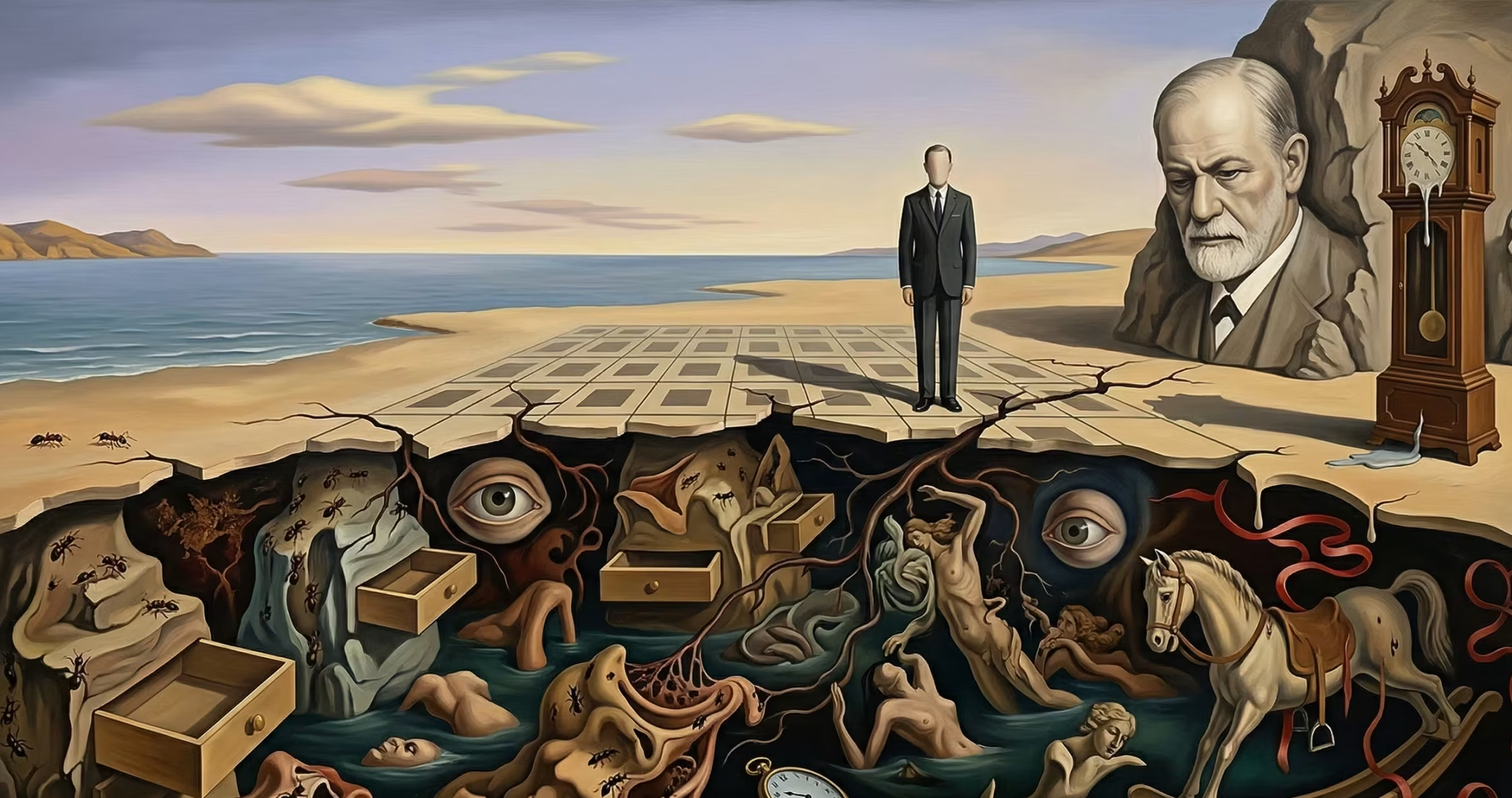
The discovery of the unconscious mind began when Sigmund Freud realised that physical symptoms stem from psychological causes instead of biological damage. By analysing hysteria, identifying emotional repression, and interpreting dreams through free association, Freud mapped a hidden psychic reality where suppressed desires and unacceptable thoughts actively shape human behaviour. Discovery of the unconscious was…