

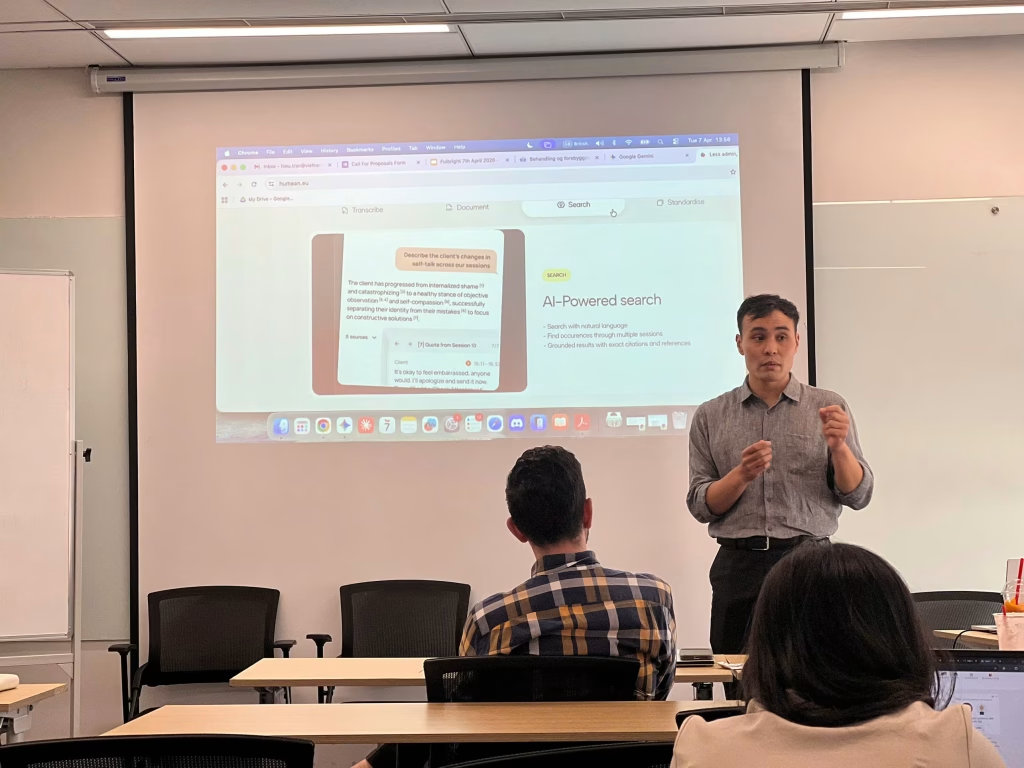
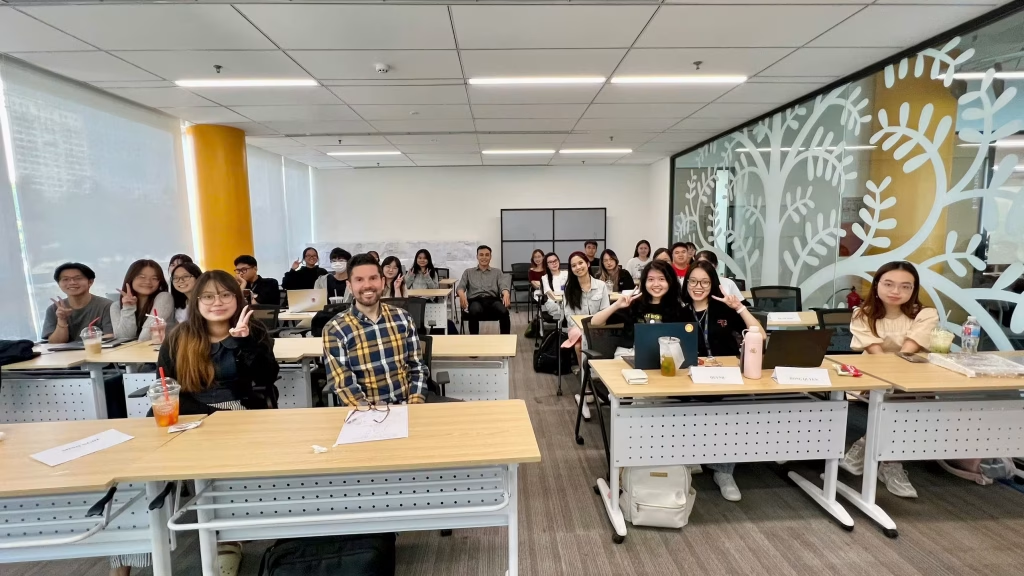
I had the pleasure of visiting Fulbright University Vietnam to lead a session on Group Counselling. While I came to share my experience, I walked away just as inspired by the students and their thoughtful, nuanced questions.
Read the full post on LinkedIn: https://lnkd.in/dcMveiA4
Why group counselling is worth teaching early
Group work tends to be taught late in psychology curricula, if at all, and usually as a variation on individual therapy. That framing is misleading. A group is not a room where one clinician treats several people in parallel; it is a setting where the members become therapeutic agents for one another, and where the facilitator’s task is to look after the conditions that make that possible rather than to supply every intervention.
What students tend to find surprising
Two things usually land hardest. The first is how much clinical information sits in what the group does rather than in what any individual reports: who interrupts whom, which topics produce silence, who is quietly elected to carry the group’s anxiety. The second is how uncomfortable it is to resist rescuing the conversation. Tolerating a difficult silence long enough for the group to work with it is a skill, and it is not an intuitive one.
For a country where demand for mental health support is growing much faster than the number of trained clinicians, group formats also matter practically. They reach more people per clinician hour, and for loneliness, social anxiety and interpersonal difficulty they are often the more effective option rather than the compromise.
Alongside teaching, I run a therapy group in Ho Chi Minh City and see people for individual therapy. You can read more about my background here.